Cable Tray vs Cable Clips is a practical question when a desk setup needs one focused improvement. The answer depends on fit, equipment, available space, and how the setup is used during a normal workday.
Use a tray for cable volume
A tray is useful for power strips, adapters, and long fixed cable loops that should stay below the desktop.
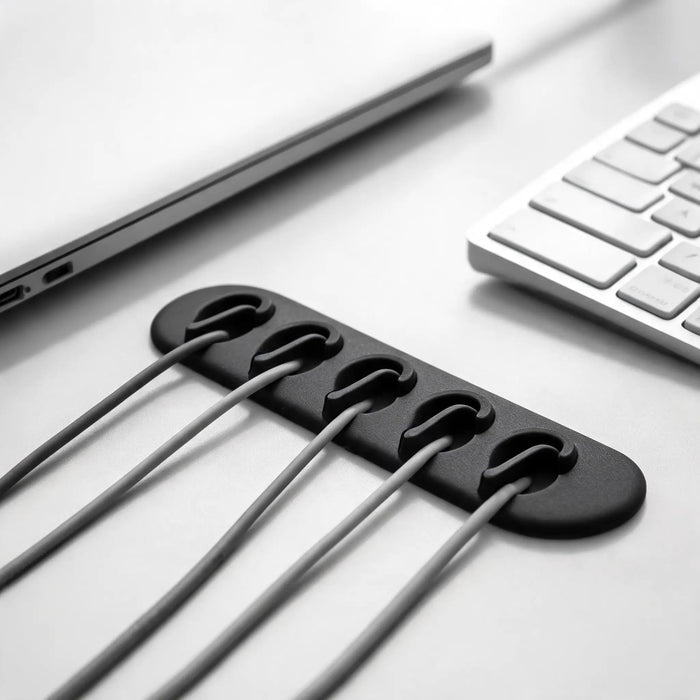
Use clips for precise routes
Clips guide individual cables along a leg, edge, or specific route. They also keep selected connectors within reach.
Combine them deliberately
Place bulky fixed hardware in a tray and use clips only where a cable must change direction or remain accessible.
What to measure before changing the setup
Write down the available width, depth, and height before choosing gear. Include the space used by cables, connectors, chair movement, and the equipment already on the desk. Product dimensions only become useful when they are compared with the real workspace.
A simple way to decide
- Identify the exact friction in the current setup.
- Measure the relevant product, chair, screen, or desk space.
- Change one variable at a time.
- Check stability, reach, and cable movement.
- Review the setup after a complete work session.
Common mistakes to avoid
- Choosing from a product photo without checking dimensions.
- Changing several parts of the setup at the same time.
- Ignoring how added height affects reach, stability, or viewing distance.
- Using dramatic claims as a substitute for fit and compatibility.
Reconsider the setup when it creates a new pressure point, unstable equipment, blocked ventilation, restricted cable movement, or a less comfortable working position.
Frequently asked questions
Which is better for a standing desk?
Often both: a tray moves with the desktop while clips define a route with enough movement slack.
Are screw-mounted trays better?
They can be secure, but adhesive or clamp options may suit desks that cannot be drilled.