At 8:42, the table was still a breakfast table. At 9:00, it had to become a place for calls, writing, spreadsheets, and several hours of focused work.
The problem was not a lack of equipment. It was that every workday began with small negotiations: where to put the laptop, where the charging cable should run, and how to make room for a notebook without pushing everything to the edge.
The first change was not buying more
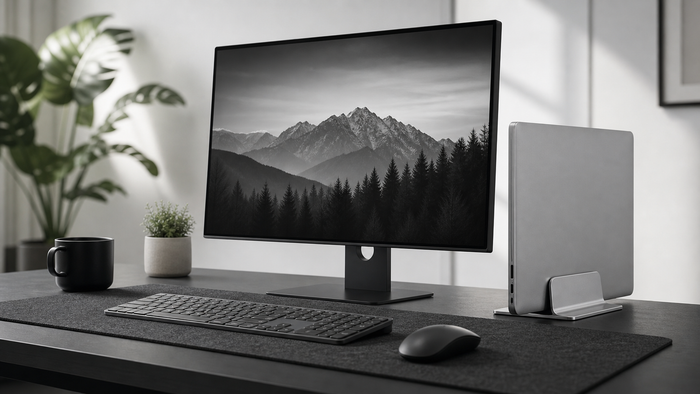
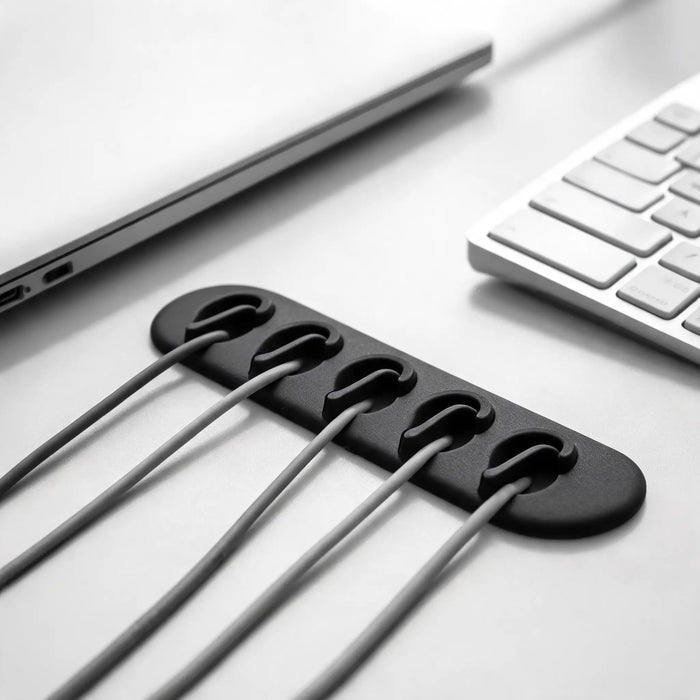
The useful starting point was to define one working zone. The laptop moved away from the eating space, the charger received one fixed route, and only the tools used every hour stayed within reach. That made the desk repeatable: it could be set up quickly and cleared just as quickly.
Then screen height became obvious
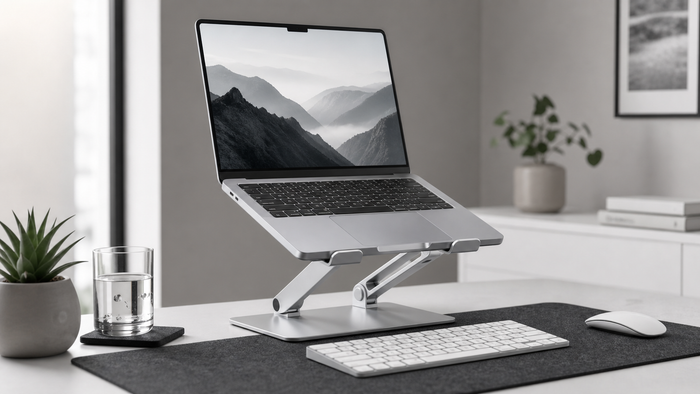
Once the clutter was quieter, the low laptop screen stood out. Raising it only made sense together with a separate keyboard and mouse; otherwise the hands would simply follow the laptop upward. The stand was therefore one part of a setup, not a complete ergonomic solution by itself.
The result: a small ritual instead of a permanent office
The room did not need a makeover. It needed a short sequence: place the laptop, connect one cable, set the keyboard down, and clear the surface after work. The desk still belonged to the home, but the workday finally had a clear beginning and ending.